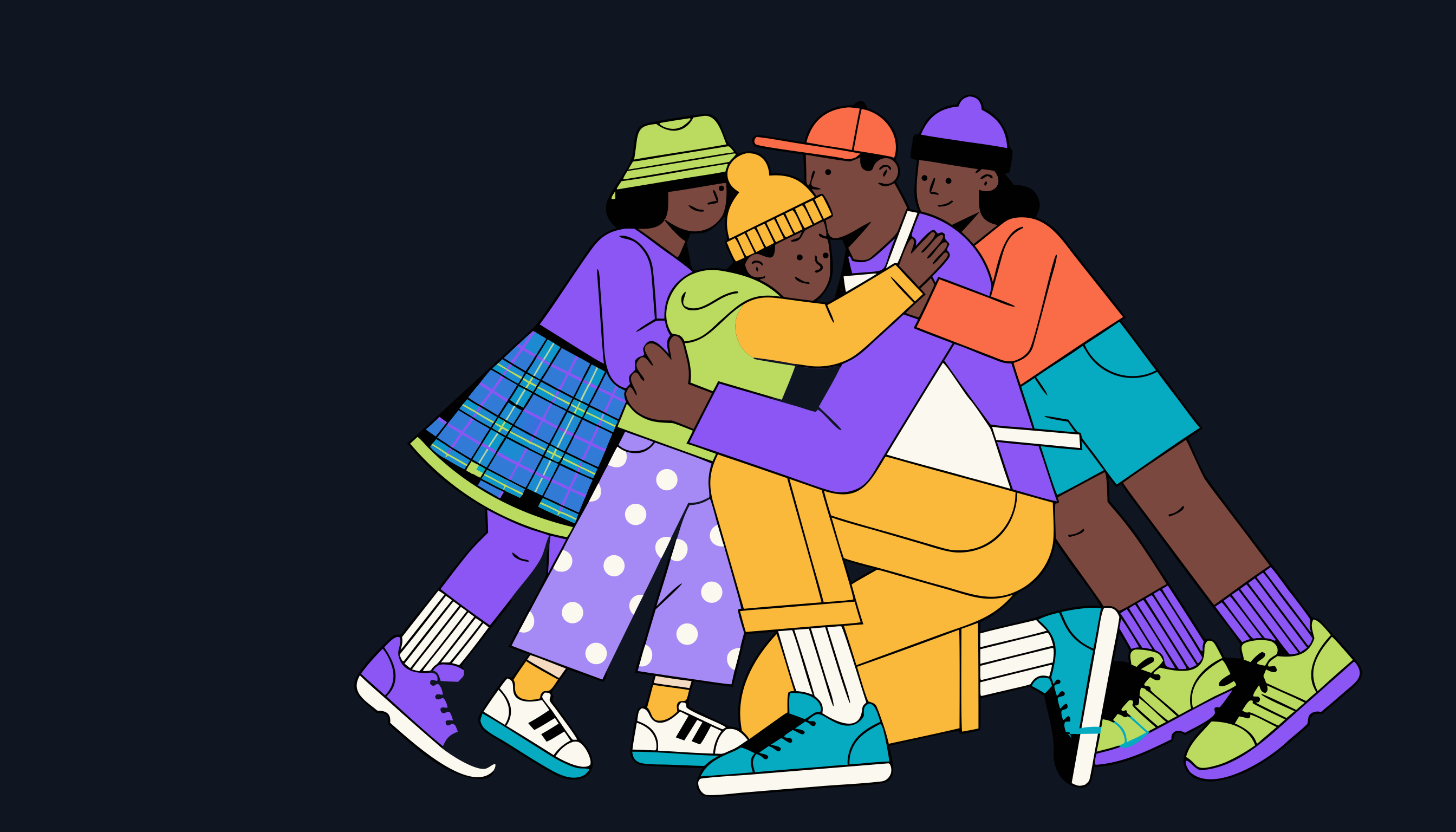
One of my friends has a running joke whenever I lose my temper. He looks me straight in the eye and asks, “Weren’t you hugged enough as a child?”
The annoying part is that he may have a point.
I was not.
Let me be clear. This is not expert advice. It is simply the view of a father raising three girls, thirteen, nine and four, and trying to figure out what kind of parent I want to be.
One thing I have learnt is that hugs matter.
I hug my children all the time. It feels natural. Sometimes I suspect I need those hugs more than they do. There is something about tiny arms around your neck and a little voice saying, “Daddy, I missed you,” that can make a difficult day suddenly feel manageable.
My childhood was different.
Both my parents were teachers, which meant discipline was practically part of the curriculum. They were strict, and there were rules for almost everything.
My mother, Kadali, had her own methods of making sure we understood when we had crossed the line. My father, Salano, did not need much more than his voice. His rules were firm, and breaking them came with consequences.
One of those rules was simple: we were not to play at the neighbours' homes.
Our friends knew this too. Whenever they spotted Dad's Peugeot 404 approaching, someone would come running with the warning. We would scatter towards home like we were escaping a crime scene.
One day, I was so deep in play that I missed the warning.
When I finally saw my father's car, I panicked. I tried to sneak through a fence and ended up badly cutting my leg on the barbed wire.
I hid the injury.
By the time I finally confessed, it had become badly infected.
The scar is still there.
It is a physical reminder of a childhood where fear was often part of discipline.
And yet, I know my parents were not monsters. They were raising children with the tools they had inherited from their own parents. In their world, obedience was important and questioning adults could easily be interpreted as disrespect.
Today, parenting feels very different.
My children ask questions.
They negotiate.
They sometimes look me straight in the eye and say, “But Dad, don't you think we need to discuss that?”
The first time Nailantei said it, I almost laughed.
Discuss?
In my childhood, some things were not discussed. You were told what to do, and you did it.
But perhaps that is the point.
Our children are growing up in a world that encourages them to ask questions. At school, they are encouraged to think critically. Online, they encounter different opinions every day. Naturally, they expect their voices to matter at home too.
That does not mean discipline has disappeared.
It means we have to rethink what discipline is for.
Correction should teach, not humiliate. It should guide, not intimidate. A child should understand that what they did was wrong without believing that they themselves are wrong.
There is an important distinction between “What you did was wrong” and “You are a bad child.”
One corrects behaviour.
The other can shape identity.
I am not pretending to have parenting figured out. I lose my patience. I get things wrong. Sometimes I hear myself speaking and realise I sound remarkably like my parents.
Then I pause.
Because perhaps parenting is also about deciding what we keep from the generation before us and what we leave behind.
We can keep the values without keeping every method.
We can teach respect without demanding fear.
We can set boundaries without creating distance.
And we can discipline our children while reminding them that they remain loved.
That last part matters.
A child should be able to make a mistake and still know where home is.
Perhaps that is what I am learning from my three girls.
They do not need a perfect father.
They need a father who listens, corrects, apologises when he gets it wrong and hugs them afterwards.
Because one day, they will become adults and carry their childhood into the world.
I hope they carry confidence.
I hope they carry kindness.
I hope they know that mistakes do not make them unworthy of love.
And perhaps, when they remember their childhood, they will remember the rules and the corrections, but they will remember the hugs a little more.
After all, we cannot change the childhood we received.
But we can decide what childhood we give our children.
Maybe that is the real opportunity of parenting.
Not to raise children who are afraid of getting things wrong, but people who know they can get things wrong, learn, try again and still come home to love.
Perhaps the hugs we missed are the ones we are now learning to give.